The Stage Is Set. Just Not For Everyone.
This week, #SwissBiotechDays is running in Basel, hosted by Swiss Biotech Association, an organisation that, to its credit, is reasonably balanced across its own board and team. The conference is a flagship event for one of Europe's most important life science ecosystems.
Walk through the plenary sessions and panels, however, and a different picture emerges.
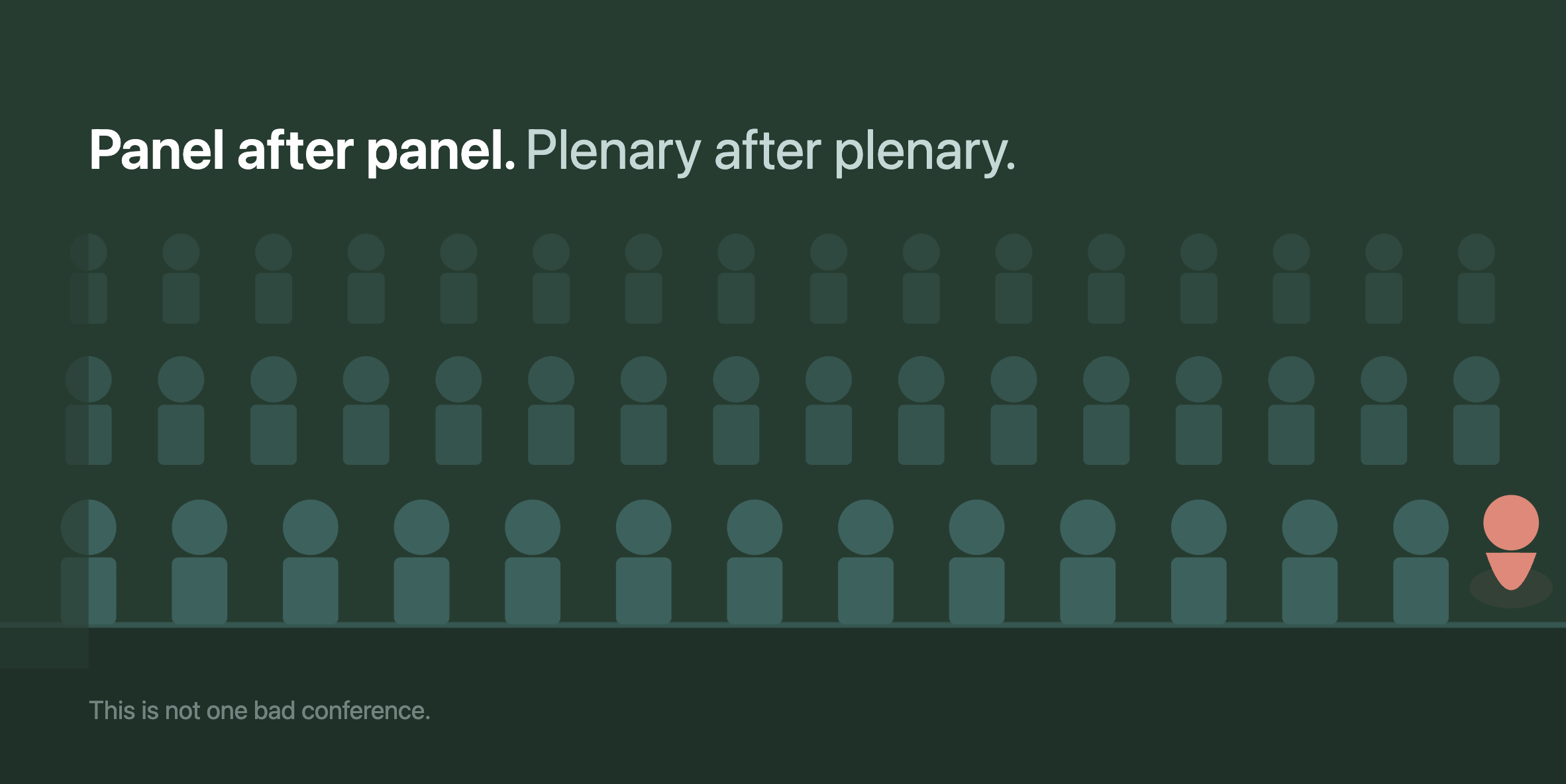
Panel after panel. Plenary after plenary.
Men. Sometimes a female moderator offered up like a peace offering. Sometimes not even that. One after another, the people shaping deals, directing capital, setting research agendas, and defining what the industry looks like: overwhelmingly male.
In the opening plenary alone: two male welcome speakers, a fireside chat between two men, a four-person business development panel with one woman, and a solo speaker from Swissmedic, the single female presenter of the session.
In the keynote panel on the Swiss biotech ecosystem the following morning: four panelists, all men. The investor panel that followed: three panelists, all men.
Further into the programme:
An R&D and innovation panel — four men.
A dealmaking panel — four men.
A fermentation panel — four men.
A biosimilar panel — four men, one female chairperson.
A digital endpoints panel — three men and a moderator.
And then there is the closed-door executive breakfast briefing. By invitation only. A select group of senior leaders. Based on who is visible throughout the rest of this conference, we think we can make a reasonable guess about the room.
Before We Look Away, The Nordics Are Not Immune.
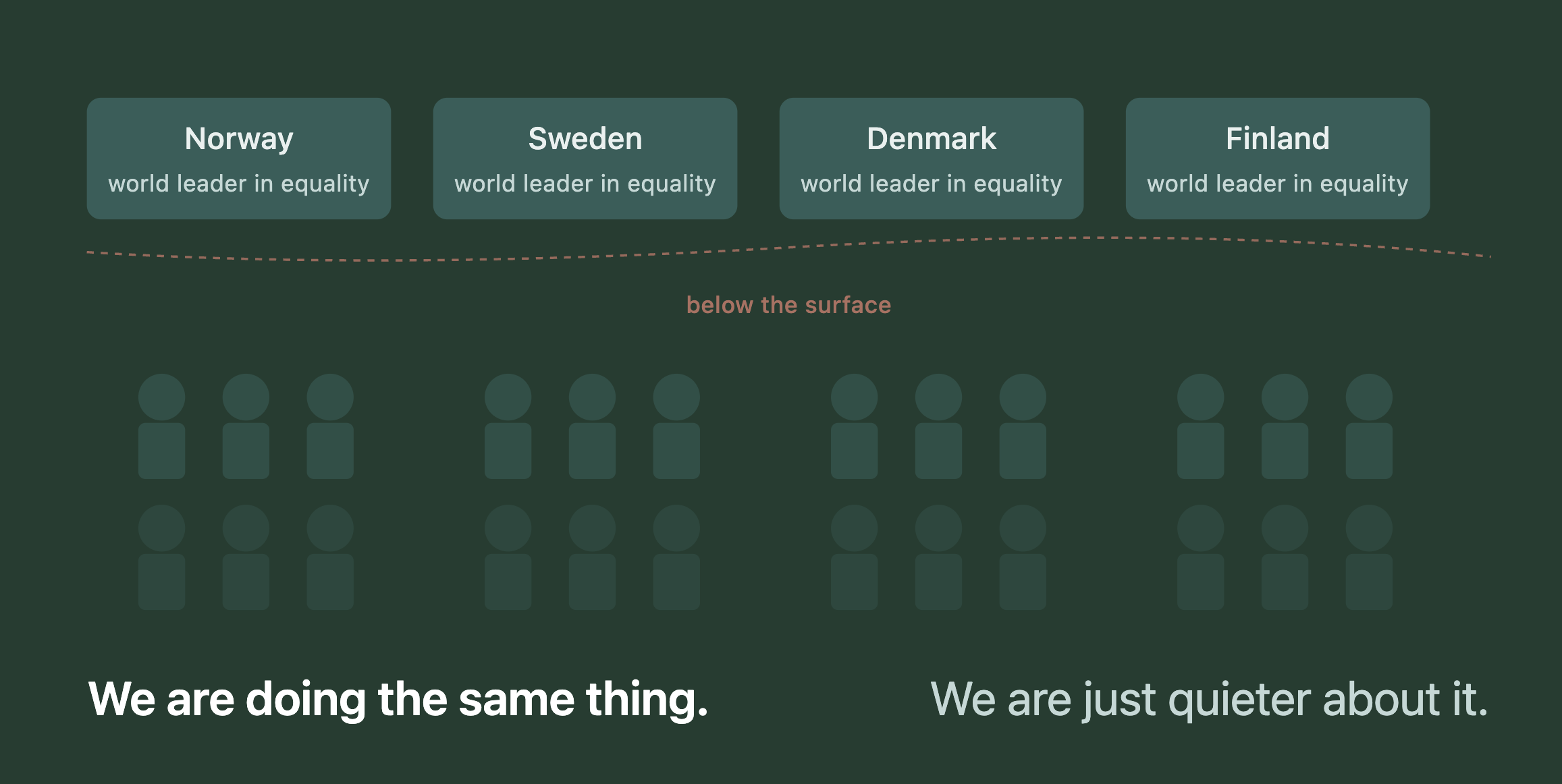
It would be convenient to read this and assume that here, in our progressive, gender-equality-focused corner of the world, we are doing better.
We are not.
Across multiple Nordic life science conferences, looking back 6 months and forward 6, we have pulled repeated examples of all-male panels. Multiple examples of male moderators leading all-male discussions. The same pattern in the very region that brands itself a world leader in equality.
We are doing the same thing. We are just doing it more quietly.
A Nordic white paper published in 2026 by Women in Life Science Norway (WiLD Norway), Women in Life Science Denmark and VILDA - leading women in life science, based on responses from 212 senior professionals, found that 3 of 4 female leaders have encountered obstacles in their careers - exactly at the point where competence is meant to convert into formal power.
Over 65% had more than 20 years of professional experience. 92% held a master's or PhD. One in three is on a management team. One in four is on a board.
These aren't women on the outside, criticising a system they haven't accessed. These are women at the top — or near it — describing precisely where it fails.
The Nordic life science sector does not have a talent problem. It has a conversion problem.
This Is Not About Optics.
Let's be clear about what is actually happening.
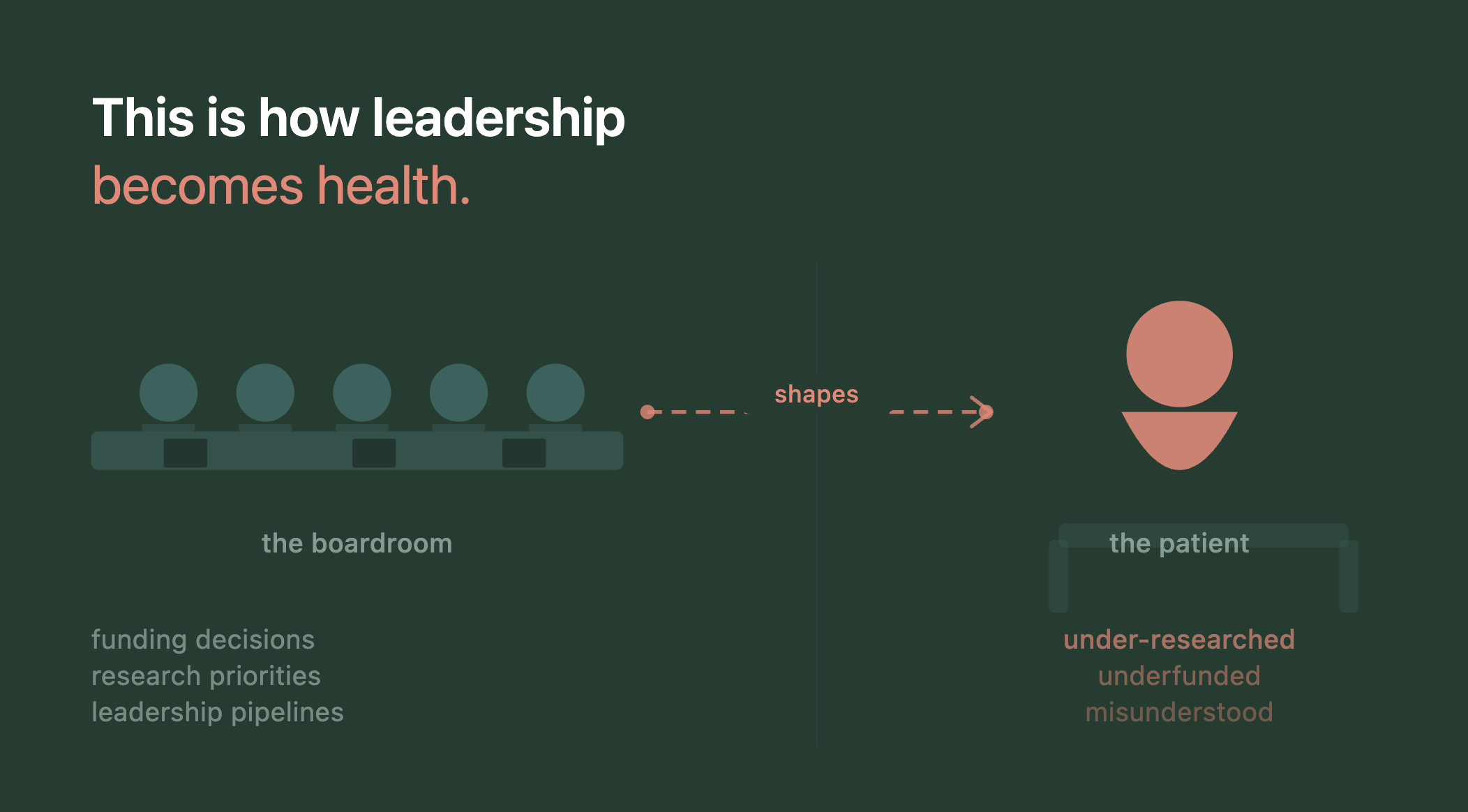
Health outcomes are shaped long before a patient enters a clinic. They are shaped in boardrooms, funding decisions, research priorities, and leadership pipelines. When women are underrepresented in those spaces, their health is under-researched, underfunded, and remains misunderstood.
This is how leadership becomes health.
The people filling up stages are not passive observers. They are the ones deciding which companies get funded, which research gets prioritised, which partnerships get built, and which ideas get backed.
They are literally constructing the future of health, and they are doing it in rooms that look remarkably like the past.
The very people building and shaping in the name of health are the ones gatekeeping the very things that would make us truly healthy.
That is not a diversity issue. That is a public health infrastructure crisis.
Conference stages are not neutral ground.
They are one of the most powerful signals an industry sends about who it considers credible, authoritative, and worth hearing.
When the same faces fill the same seats year after year, it does not just reflect a culture. It reinforces one.
Women are not absent from this industry. We actually dominate the workforce, in research, in clinical roles, in early careers. What changes as seniority increases is not the talent pool. What changes is access: to networks, to capital, to the rooms where decisions are made and relationships are built.
New data from the European Investment Fund makes this structural reality impossible to ignore. Women-led biotech teams are, on average, more highly educated and come from more prestigious universities, yet receive approximately 700,000 EUR less per investment round. Academic excellence with a top PhD from an elite institution does not close the gap.
What closes the gap is proximity to power. Warm introductions. Prior relationships with funds. Being known before you pitch the investor.
Closed-door networking among invite-only senior leaders.
A man's advantage is not intelligence or training. It is access. Access, as these conference programmes make plain, is still being curated by a remarkably narrow group of people. And in a capital-constrained environment, informal networks become even more decisive and access concentrates further.
Who Gets Invited Into The Room
Mid-career is where the pipeline breaks - right where visibility and active sponsorship become most critical, and where, paradoxically, support structures most often disappear.
The higher women climb, the weaker the structures beneath them. Many receive early support. Far fewer experience the same traction at the threshold of real power.
Among the most common structural barriers: unreasonable salary differences, limited access to decision-making forums, and bias in recruitment.
Conferences are a core part of it. They are where networks are built, where visibility is created, where the next invitation is earned.
A speaker slot is not just a speaking opportunity. It is a signal of credibility that follows you into the next pitch meeting, the next board nomination, the next deal. Exclusion from the stage is exclusion from the ecosystem.
So What Do We Ask Of Organisers?
We don’t ask for perfection. But don’t give us a female moderator placed in front of an all-male panel and called progress.
We ask for intention. We ask for accountability. Look at your yourselves honestly: does this stage reflect the industry we say we want to build?
The expertise is there. The women are there. The question is whether YOUR invitation is there.
What Do We Ask Of Individuals — And Of You, Men?
If you are in a room that is imbalanced: name a woman. Put your reputation behind her. Open the door and bring her in. Fix your room before you leave it.
If you are building: design your technology, your research, and your study protocols inclusively. The female body is not a variant, so stop treating it like one.
If you have capital: invest inclusively. Don’t talk about being inclusive and equal – fund it like you mean it.
If you are hiring or promoting: look beyond your network. Look at how gendered language impacts how you advertise the position. The pipeline is not broken, but your process might very well be.
And if you are invited to speak on a panel that lacks diversity — SAY NO. Decline publicly. Explain why. Your absence from a bad panel is worth more than your presence on it.You have the power - what are you going to do with it?
WiLD Norway exists because these rooms matter.
Because who sits at the table determines what gets studied, what gets funded, and ultimately what gets built — and who benefits.
Women's health is not a niche and, if it were, it would be “the world’s largest niche” (to quote Malin Frithiofsson of Daya Ventures ). Women’s health is a fundamental part of our collective public health and economic resilience.
And it will remain underfunded and under-researched for as long as the people shaping that future keep filling the same stages with the same faces.
We work to change who gets invited, who gets backed, and who gets heard.
If you organise conferences, panels, or events in health and life sciences: we see you. We are watching. And we will continue to call you out.