90 Million NOK for Women’s Health Research
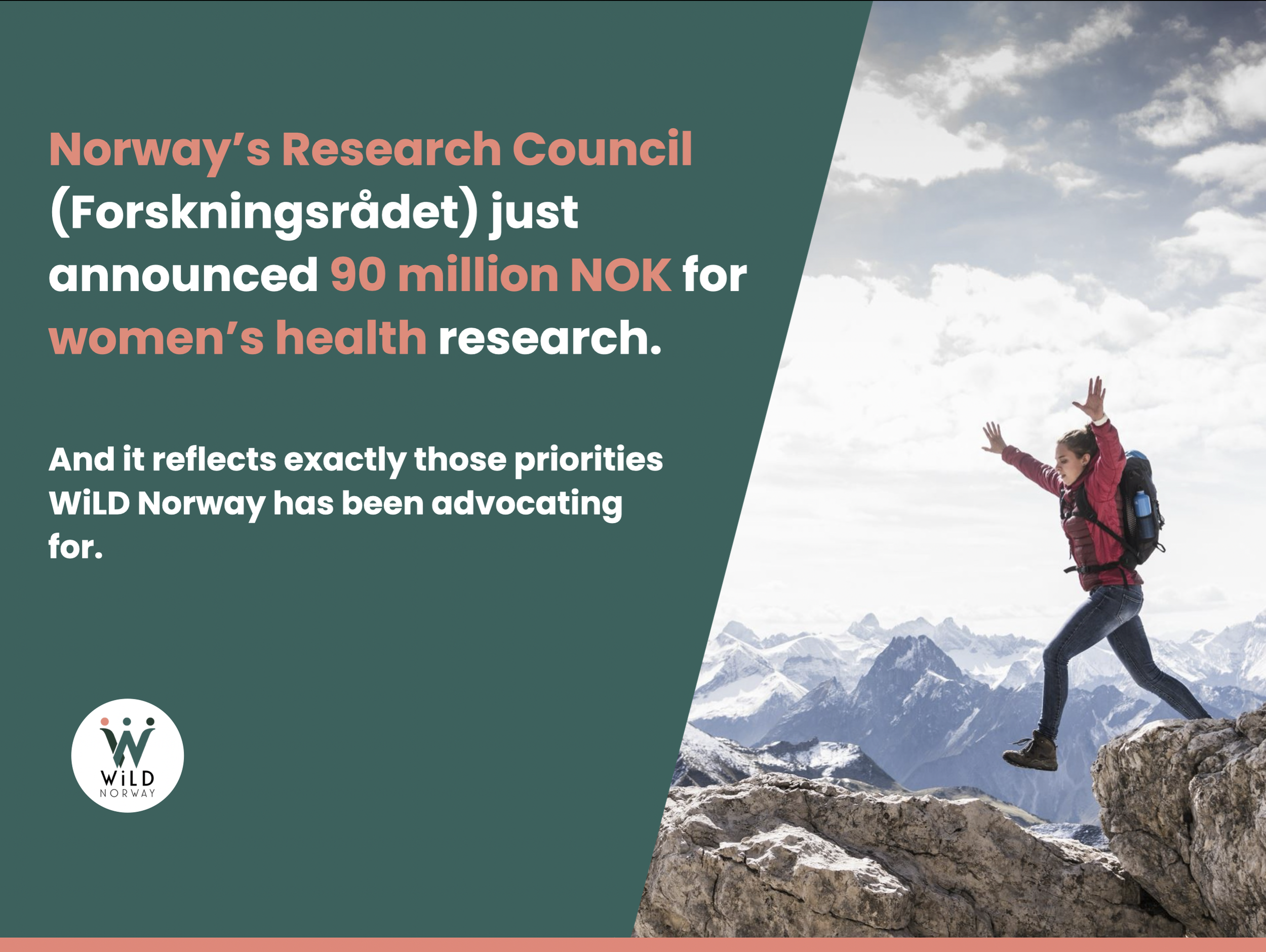
For years, women's health research has been fragmented, underfunded, and narrowly focused on reproduction. But change is starting. The Research Council’s new initiative signals that women’s health is finally becoming a national research priority.
Three important steps announced:
A national network for women’s health research
Targeted funding for menopause research
Integration of sex and gender perspectives in medical research
These are exactly the types of structural changes needed to close the health knowledge gap.
Women’s health isn’t a woman’s issue, or even a clinical issue — it is national & economic resilience
Every year:
27,000 Norwegian women enter menopause, yet many still experience many years-long diagnostic delays
Women suffer significantly more adverse drug reactions due to male-centric research (from basic to human science)
Women live longer, but spend 25% more of their lives in poor health
The consequences go far beyond individual health:
Innovation gaps in women-specific diagnostics, treatments, and solutions
Underutilized talent in research and industry, especially in life sciences
Lost workforce participation and productivity
Higher long-term healthcare costs
If Norway wants to lead in women’s health innovation, at least three priorities must follow next.
Priority 1
Close the leadership gap in life science — because balanced leadership = better health outcomes
Women make up 60–90% of the health workforce but hold only 13–21% of leadership roles.
Why this matters:
Leadership & those holding the money set research priorities
Funding decisions favor male-coded questions if women aren’t at the table
This perpetuates under-researched conditions, diagnosis delays, and adverse drug reactions
The leadership gap IS the women’s health gap.
Priority 2
Implement the Women’s Health Impact Tracking (WHIT) Platform
A national system developed by the World Economic Forum to map care gaps, measure outcomes, and track the economic cost of inaction.
You cannot solve what you do not measure.
Priority 3
Prioritize high-gap disease areas
Invest in conditions where women are most underdiagnosed or underserved:
Cardiovascular disease
Diabetes / metabolic disorders
Autoimmune disorders
Chronic pain & musculoskeletal disorders
Mental health conditions
Menopause
PCOS (polycystic ovary syndrome)
Maternal hypertension / preeclampsia
Chronic reproductive health conditions
Focusing here maximizes impact for both women and society. This 90 million NOK announcement is an incredibly positive step. But closing the women’s health gap requires systemic change across research, innovation, public and private funding, leadership, and policy.
That’s what WiLD Norway will continue to work toward.